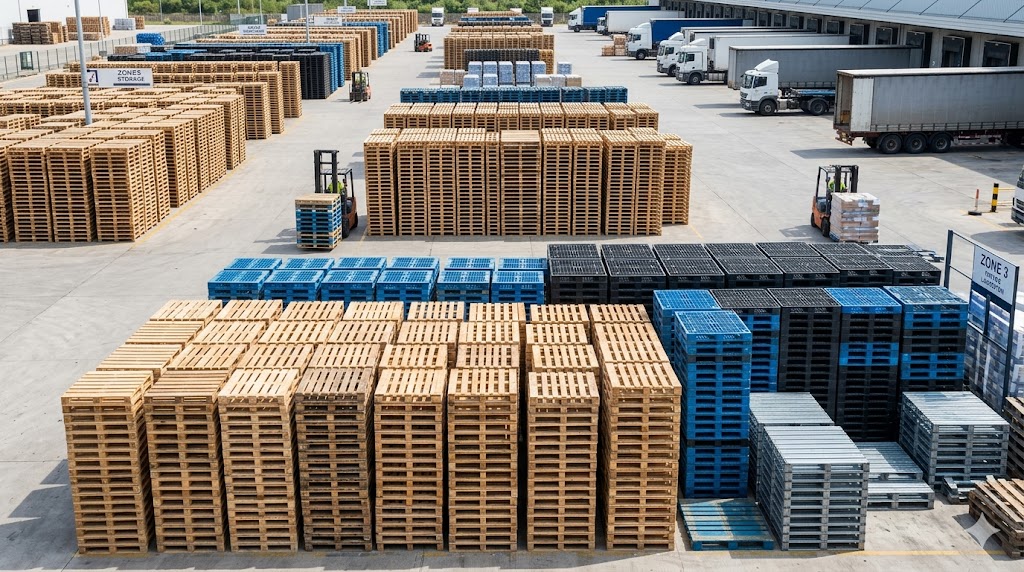
Our Commitment to the Planet
Sustainability at
Pallets West Coast
Every pallet we save from the landfill is a victory for the environment. Our business was built on the principle that wood is too valuable to waste, and that the pallet supply chain can be a powerful force for environmental good.
Join the Circular Economy
Request a quote for recycled pallets or sell us your surplus. Every pallet reused is a win for the environment.
Our Green Mission
At Pallets West Coast, we believe that sustainability is not an add-on -- it is our entire business model. When we recycle a pallet, we are preventing that wood from entering a landfill. When we repair a damaged pallet, we are extending its useful life by years. When we grind unusable wood into mulch, we are turning waste into a valuable resource.
Our mission is to be the most environmentally responsible pallet company on the West Coast. We measure our success not just in revenue, but in tons of wood diverted from landfills, trees saved from harvest, and carbon emissions prevented. Every decision we make is filtered through one simple question: Is this the most sustainable choice?
Environmental Impact Metrics
These are not aspirational numbers. These are real measurements from our operations, updated annually and verified against industry benchmarks.
97.3%
Material Recovery Rate
Of all wood entering our facility, 97.3% is recovered through reuse, repair, recycling, or biomass conversion. Only 2.7% is waste.
850+
Tons of Wood Saved Annually
Each year, we divert over 850 tons of usable wood from landfills through our recycling and repair programs.
1,200+
Trees Preserved Per Year
By recycling and reusing pallets, we reduce demand for new lumber, saving the equivalent of 1,200+ mature trees annually.
340
Metric Tons CO2 Prevented
Our recycling operations prevent approximately 340 metric tons of carbon dioxide emissions per year compared to manufacturing new pallets.
The Circular Economy of Pallets
The traditional linear economy follows a "take, make, dispose" model. Our circular approach keeps materials in use for as long as possible, extracting maximum value before recovering and regenerating products and materials at end of life.
Collection
We collect used pallets from businesses, warehouses, distribution centers, and manufacturers across Oregon. Our efficient routing system minimizes fuel consumption during collection.
Inspection & Sorting
Every pallet is individually inspected and sorted by grade (A, B, or C) and size. Pallets in good condition go directly back into inventory for resale. Damaged pallets move to repair.
Repair & Refurbishment
Damaged pallets are repaired by replacing broken boards, re-nailing loose components, and restoring structural integrity. This extends the pallet life by 3-5 additional use cycles.
Resale & Redistribution
Graded pallets are sold to businesses that need them, completing the reuse loop. A pallet can cycle through this process 8-15 times before reaching end of life.
Dismantling & Recovery
Pallets that cannot be repaired are dismantled. Usable boards are salvaged for repairs on other pallets. Metal fasteners are separated for scrap recycling.
Material Conversion
Remaining wood is ground into mulch, animal bedding, or biomass fuel. Nothing is wasted. The carbon stored in the wood continues to serve a useful purpose even at end of life.
Zero Waste Is the Goal
In a fully circular pallet economy, no wood reaches a landfill. Every board, block, and stringer finds a new purpose -- whether as a repaired pallet, landscape mulch, animal bedding, or clean energy. We are at 97.3% recovery today and pushing toward 100%.
Carbon Reduction Initiatives
Beyond our core recycling operations, we have implemented specific initiatives to further reduce our carbon footprint and that of our customers.
Biomass Energy Recovery
Our heat treatment kiln is powered primarily by wood waste from our own operations. Instead of consuming natural gas or propane, we use ground pallet wood as biomass fuel, creating a closed-loop energy system. This eliminates the need for fossil fuels in our most energy-intensive process.
Result: 40% of facility energy from on-site biomass, saving approximately 15,000 gallons of propane annually.
Route Optimization
We use route optimization software to plan our pickup and delivery routes, combining multiple stops per trip and eliminating empty miles. By consolidating collections and deliveries, we reduce total fleet mileage by an estimated 30% compared to point-to-point routing.
Result: 30% fewer fleet miles driven, reducing diesel consumption by an estimated 4,000 gallons per year.
Local Sourcing Priority
We prioritize sourcing pallets from within 100 miles of our facility. This reduces the transportation emissions associated with pallet collection and keeps the economic benefits within our local community. Currently, 85% of our inventory comes from within this radius.
Result: Average collection distance of 47 miles vs. industry average of 120+ miles.
Water Conservation
Our facility uses no water in the pallet processing workflow. Unlike plastic pallet manufacturing (which requires cooling water) or metal fabrication (which uses cutting fluids), wood pallet recycling is inherently water-free. Our stormwater management system prevents any runoff contamination.
Result: Zero industrial water consumption in pallet processing operations.
The Difference Recycling Makes
A side-by-side comparison of the environmental impact: manufacturing a new pallet from scratch versus recycling an existing one.
New Pallet (From Scratch)
Raw Material
3.1 board feet of new lumber
Energy Required
13.5 kWh per pallet
CO2 Emissions
31.2 kg CO2e per pallet
Water Usage
6.1 gallons (lumber processing)
Transport Impact
Mill to manufacturer + manufacturer to buyer
Waste Generated
Sawdust, offcuts, bark (15-20% of raw lumber)
Recycled Pallet
Raw Material
0 board feet of new lumber (reused)
100% savings
Energy Required
1.8 kWh per pallet (sorting + minor repair)
87% less energy
CO2 Emissions
3.9 kg CO2e per pallet
87.5% reduction
Water Usage
0 gallons (no processing water needed)
100% savings
Transport Impact
Collection point to buyer only
50% fewer transport miles
Waste Generated
Near zero -- replaced boards go to mulch
95%+ reduction
Choosing recycled pallets reduces environmental impact by 85-100% across every metric.
When scaled to the thousands of pallets a typical business uses annually, the cumulative environmental benefit is enormous. A company using 10,000 recycled pallets per year instead of new prevents approximately 273 metric tons of CO2 emissions -- equivalent to taking 59 cars off the road.
Our Green Certifications & Pledges
ISPM-15 Heat Treatment Certified
Our facility meets international phytosanitary standards using heat -- not chemicals -- to treat wood packaging for export. We chose heat treatment exclusively because it is the most environmentally responsible method available.
NWPCA Member in Good Standing
Active member of the National Wooden Pallet & Container Association, committed to their environmental stewardship guidelines and industry best practices for waste reduction.
Zero-Waste-to-Landfill Initiative
We are pledged to a zero-waste-to-landfill operation. Currently at 97.3% material recovery, we are actively working to close the remaining 2.7% gap through improved sorting and processing techniques.
Oregon DEQ Full Compliance
Full compliance with all Oregon Department of Environmental Quality regulations for air quality, stormwater management, and wood waste processing. We exceed minimum requirements in most categories.
Sustainable Lumber Sourcing
All new lumber we purchase comes from suppliers with SFI (Sustainable Forestry Initiative) or FSC (Forest Stewardship Council) chain-of-custody certification. We never source from old-growth forests.
Community Carbon Pledge
We have pledged to reduce our per-pallet carbon footprint by 25% by 2028 (from our 2023 baseline). This includes investments in equipment efficiency, solar energy exploration, and fleet electrification planning.
How You Can Make a Difference
Sustainability is a team effort. Here are concrete steps your business can take to reduce pallet waste and environmental impact.
Buy Recycled
Choose recycled pallets over new whenever your application allows. Grade B recycled pallets work perfectly for 80%+ of standard warehouse and shipping needs at a fraction of the environmental cost.
View Used PalletsSell Your Surplus
Do not let unused pallets pile up or go to the dump. We buy used pallets in any condition. Even broken pallets have value for board recovery and wood recycling.
Sell PalletsRepair, Do Not Replace
A single pallet repair saves approximately 3.1 board feet of lumber and prevents 27 kg of CO2 emissions. Our repair service extends pallet life at 40-60% less cost than buying new.
Repair ServicesRecycle Responsibly
When pallets reach end of life, bring them to us instead of the landfill. We achieve 97.3% material recovery, ensuring virtually nothing is wasted.
Recycling ProgramCorporate Sustainability Integration Guide
Integrating sustainable pallet practices into your corporate sustainability program is one of the fastest, highest-impact steps a supply chain organization can take. This guide shows you how to embed pallet sustainability into your existing ESG framework and reporting.
Step 1: Baseline Your Current Pallet Impact
- • Audit your annual pallet consumption by type (new vs. recycled), size, and grade
- • Calculate your current pallet carbon footprint using the formula: (new pallets x 31.2 kg CO2e) + (recycled pallets x 3.9 kg CO2e)
- • Document your pallet disposal pathway -- how many go to landfill vs. recycling vs. return programs
- • Identify your pallet cost per unit and total annual pallet spend
- • Map your pallet supply chain from source through end-of-life disposition
Step 2: Set Measurable Targets
- • Set a recycled-pallet adoption target (e.g., "80% recycled pallets by end of next fiscal year")
- • Establish a zero-pallet-to-landfill goal with a specific timeline
- • Create a pallet return rate KPI (target: 70%+ of outbound pallets returned for reuse)
- • Set a carbon reduction target tied to pallet sourcing changes
- • Include pallet metrics in your annual sustainability report or ESG disclosure
Step 3: Implement Changes
- • Switch purchasing specifications to prioritize recycled pallets for all non-critical applications
- • Set up a pallet return program with your recycler (like Pallets West Coast) for used pallet buyback
- • Train receiving and shipping teams on proper pallet handling to extend pallet life
- • Add pallet sustainability requirements to your vendor scorecard and procurement policies
- • Implement pallet tracking to monitor utilization rates and identify waste points
Step 4: Report and Improve
- • Track monthly pallet metrics: recycled ratio, return rate, disposal volume, carbon savings
- • Include pallet data in GRI, CDP, or SASB sustainability disclosures under waste management
- • Use carbon savings data in Scope 3 emissions reporting for your supply chain impact
- • Share results with stakeholders through your annual sustainability report
- • Conduct annual reviews and set progressively more ambitious targets
Environmental Impact: By the Numbers
Quantifying your environmental impact helps justify sustainable procurement decisions and provides data for ESG reporting. Use these reference calculations to estimate the impact of switching from new to recycled pallets at various scales.
| Annual Volume | CO2 Prevented | Trees Saved | Lumber Saved (board ft) | Landfill Diverted (tons) | Cost Savings Estimate |
|---|---|---|---|---|---|
| 500 pallets | 13.7 metric tons | 60 | 1,550 | 10 | $2,500-$3,500 |
| 1,000 pallets | 27.3 metric tons | 120 | 3,100 | 20 | $5,000-$7,000 |
| 5,000 pallets | 136.5 metric tons | 600 | 15,500 | 100 | $25,000-$35,000 |
| 10,000 pallets | 273 metric tons | 1,200 | 31,000 | 200 | $50,000-$70,000 |
| 25,000 pallets | 682.5 metric tons | 3,000 | 77,500 | 500 | $125,000-$175,000 |
| 50,000 pallets | 1,365 metric tons | 6,000 | 155,000 | 1,000 | $250,000-$350,000 |
Equivalency Reference
1 Metric Ton CO2 =
- • Driving a car 2,500 miles
- • Burning 113 gallons of gasoline
- • Powering a US home for 1.2 months
- • 1 round-trip flight NYC to Chicago
1 Tree Saved =
- • Approximately 3.1 board feet of lumber
- • 48 lbs of CO2 absorbed per year
- • 100 lbs of oxygen produced per year
- • Decades of growth preserved
1 Recycled Pallet =
- • 27.3 kg CO2 prevented vs. new
- • 3.1 board feet of lumber saved
- • 40 lbs of wood diverted from landfill
- • 11.7 kWh of energy saved
Partner Certifications & Compliance
We hold our partners, suppliers, and customers to the same environmental standards we set for ourselves. Here is how our certifications and compliance programs extend throughout our supply chain.
Lumber Supplier Requirements
- All new lumber from SFI or FSC certified sources
- No old-growth forest harvesting
- Chain-of-custody documentation required
- Sustainable replanting verification
- Annual compliance audits of top 10 suppliers
Transportation Partner Standards
- EPA SmartWay partner preferred carriers
- Fleet fuel efficiency requirements (6+ MPG)
- Route optimization compliance
- Idle-reduction policies enforced
- Annual emissions reporting from all carriers
Customer Program Requirements
- Pallet return program participation encouraged
- Proper pallet storage guidance provided
- End-of-life recycling support for all customers
- Sustainability impact reports available on request
- Joint environmental improvement goal-setting
Employee Green Initiatives & Community Programs
Sustainability starts with our own team. We empower every employee to be an environmental steward, and we extend our green mission into the communities we serve through active participation and support.
Employee-Led Sustainability
Green Team Committee
A cross-departmental team of employees meets monthly to identify new sustainability opportunities, track our environmental metrics, and propose improvement projects. Any employee can join. The Green Team has driven initiatives including our composting program, LED lighting conversion, and paperless office transition.
Sustainability Training
Every new hire receives orientation on our environmental mission, waste sorting protocols, and their role in maintaining our 97.3% material recovery rate. Quarterly refresher sessions cover new initiatives, updated procedures, and celebrate team achievements in waste reduction.
Eco-Commute Incentive
Employees who carpool, bike, or use public transit to work receive a monthly bonus. We provide secure bike storage, a basic bike repair station, and preferential parking for carpools. Currently, 35% of our team participates in the eco-commute program.
Waste Reduction Challenge
Annual team competition to identify and eliminate waste streams in our operations. Last year's winning idea -- optimizing our nail usage pattern -- saved 12% on fastener consumption while maintaining pallet quality. Winners receive a bonus and public recognition.
Community Environmental Programs
Community Garden Mulch Donation
Non-repairable pallet wood is ground into clean, untreated mulch and donated to community gardens across Lane County. In the past year, we provided over 40 cubic yards of mulch to six local gardens and the Eugene Parks Department, keeping wood waste productive and helping local food production.
River Cleanup Sponsorship
We are a proud sponsor of the annual Willamette River Cleanup event. Our team provides volunteer labor, vehicles for debris removal, and financial support. In 2024, our crew removed over 2 tons of debris from waterways in the Eugene-Springfield area.
School Environmental Education
We host field trips for local elementary and middle school students, teaching them about the circular economy, wood recycling, and how everyday business operations can protect the environment. Over 500 students visited our facility last year, with hands-on demonstrations of sorting, grading, and repair processes.
Small Business Sustainability Consulting
We offer free 30-minute consultations to local small businesses looking to reduce their pallet waste. Topics include setting up return programs, choosing the right pallet grade to minimize waste, and calculating the carbon footprint of their pallet operations. Over 200 businesses have participated since we started the program in 2020.
Ready to Build a Greener Supply Chain?
Contact us to learn how switching to recycled pallets, setting up a return program, or partnering with Pallets West Coast can reduce your environmental footprint while saving money.